Spiritual relaxation therapy to improve sleep quality for nurses working shifts who experience sleep problems: a quasi-experimental study

Downloads
Background: Impaired sleep quality is a common problem experienced by nurses working shifts, and if not treated properly, it can impact their work performance and overall health. Spiritual Emotional Freedom Technique (SEFT) therapy has been proven to improve sleep quality. However, its effectiveness has never been studied in nurses who experience sleep disorders due to working shifts.
Objective: To investigate the influence of spiritual relaxation therapy on sleep quality among nurses experiencing sleep disturbances due to shift work.
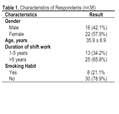
Method: This is a Quasi-Experimental study with a pre-test-posttest control group design. A total of 38 nurses who experience sleep disorders due to working shifts were included in this study. The PSQI questionnaire was utilized as the instrument to measure sleep quality. Data analysis involved the Mann-Whitney test.
Results: The average sleep quality before the intervention was in the mild category; after the intervention, most were in the good category. The results showed that the sleep quality of nurses who received spiritual relaxation was better than the control group (p<0.001).
Conclusion: Spiritual relaxation therapy effectively improves the sleep quality of nurses experiencing sleep disturbances due to shift work.Authors retain copyright and grant the journal right of first publication with the work simultaneously licensed under a Creative Commons Attribution-NonCommercial 4.0 International License that allows others to share the work with an acknowledgement of the work's authorship and initial publication in this journal.
Authors are able to enter into separate, additional contractual arrangements for the non-exclusive distribution of the journal's published version of the work (e.g., post it to an institutional repository or publish it in a book), with an acknowledgement of its initial publication in this journal.
Authors are permitted and encouraged to post their work online (e.g., in institutional repositories or on their website) prior to and during the submission process, as it can lead to productive exchanges, as well as earlier and greater citation of published work (See The Effect of Open Access).

This work is licensed under a Creative Commons Attribution-NonCommercial 4.0 International License.