Postural exercise impaction on the development of vertebral curves and functional deformity for adolescent idiopathic scoliosis

Downloads
Background: Adolescent idiopathic scoliosis (AIS) is a common spinal deformity affecting children aged 10–18 years. Various treatment approaches, including specific exercises, bracing, surgery, traction, casting, and biofeedback, have been implemented to manage AIS. However, posture correction exercises remain a non-invasive rehabilitation strategy with the potential to prevent scoliosis progression and improve functional outcomes.
Purpose: This study aimed to evaluate the effectiveness of posture correction exercises in reducing vertebral curvature deformity and improving functional abilities in adolescents with idiopathic scoliosis.
Methods: This quasi-experimental study employed a one-group pretest-posttest design involving 30 students aged 10–15 years diagnosed with AIS. Participants underwent a four-week supervised posture correction exercise program. The primary outcome, vertebral curvature deformity, was assessed using the Adam’s Forward Bending Test, while changes in vertebral inclination angle were measured using a Scoliometer. All data were documented through structured questionnaires.
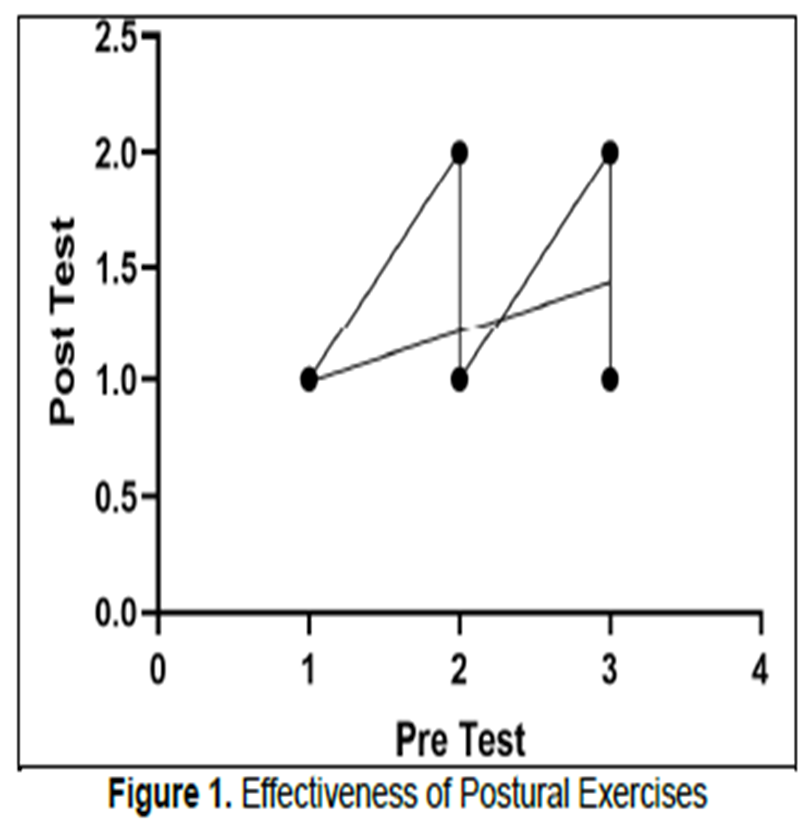
Results: The findings revealed a statistically significant reduction in vertebral inclination angle following the intervention (p<0.001), indicating the effectiveness of posture correction exercises as part of scoliosis-specific rehabilitation programs.
Conclusion: Posture correction exercises significantly reduce vertebral curvature deformity and enhance functional capabilities in adolescents with AIS. These findings support their integration into physiotherapy programs as a non-invasive rehabilitative and preventive approach for scoliosis management.
Copyright (c) 2025 MEDISAINS

This work is licensed under a Creative Commons Attribution-NonCommercial 4.0 International License.
Authors who publish with this journal agree to the following terms:Authors retain copyright and grant the journal right of first publication with the work simultaneously licensed under a Creative Commons Attribution-NonCommercial 4.0 International License that allows others to share the work with an acknowledgement of the work's authorship and initial publication in this journal.
Authors are able to enter into separate, additional contractual arrangements for the non-exclusive distribution of the journal's published version of the work (e.g., post it to an institutional repository or publish it in a book), with an acknowledgement of its initial publication in this journal.
Authors are permitted and encouraged to post their work online (e.g., in institutional repositories or on their website) prior to and during the submission process, as it can lead to productive exchanges, as well as earlier and greater citation of published work (See The Effect of Open Access).
This work is licensed under a Creative Commons Attribution-NonCommercial 4.0 International License.