Kelakai serum reduces UVB-induced vascular endothelial growth factor and interleukin-6: in vivo study

Downloads
Background: UVB exposure increases reactive oxygen species leading to higher expression of vascular endothelial growth factor (VEGF) and interleukin-6 (IL-6), which accelerate photoaging. Kelakai leaf (Stenochlaena palustris) contains flavonoids and phenolic compounds with antioxidant and anti-inflammatory potential, yet its efficacy in serum formulations has not been evaluated.
Purpose: To determine the effect of kelakai leaf extract serum on VEGF and IL-6 expression in BALB/c mice exposed to subchronic UVB radiation.
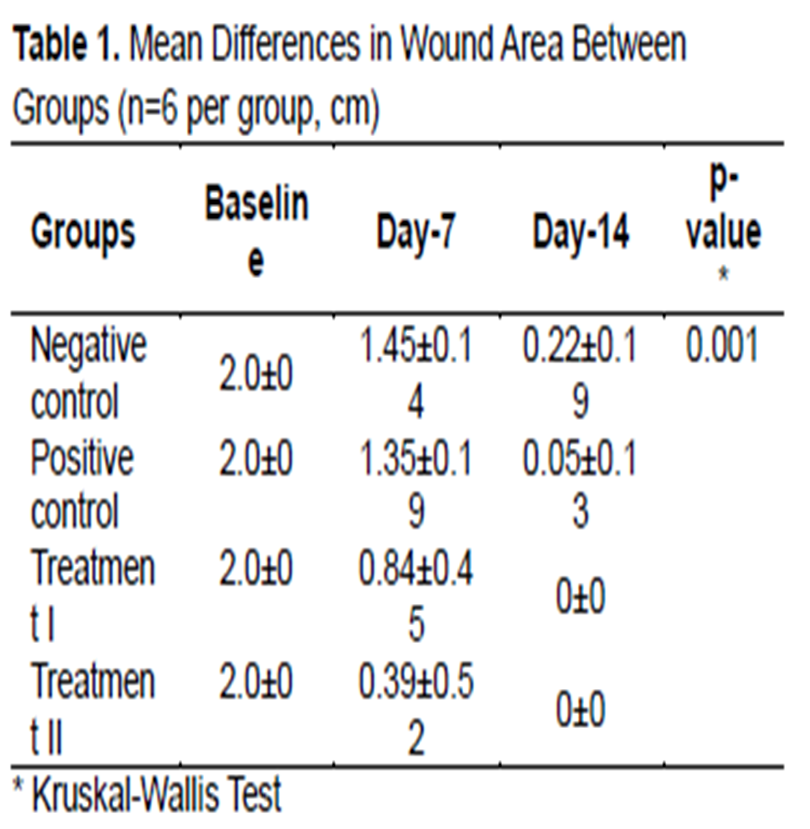
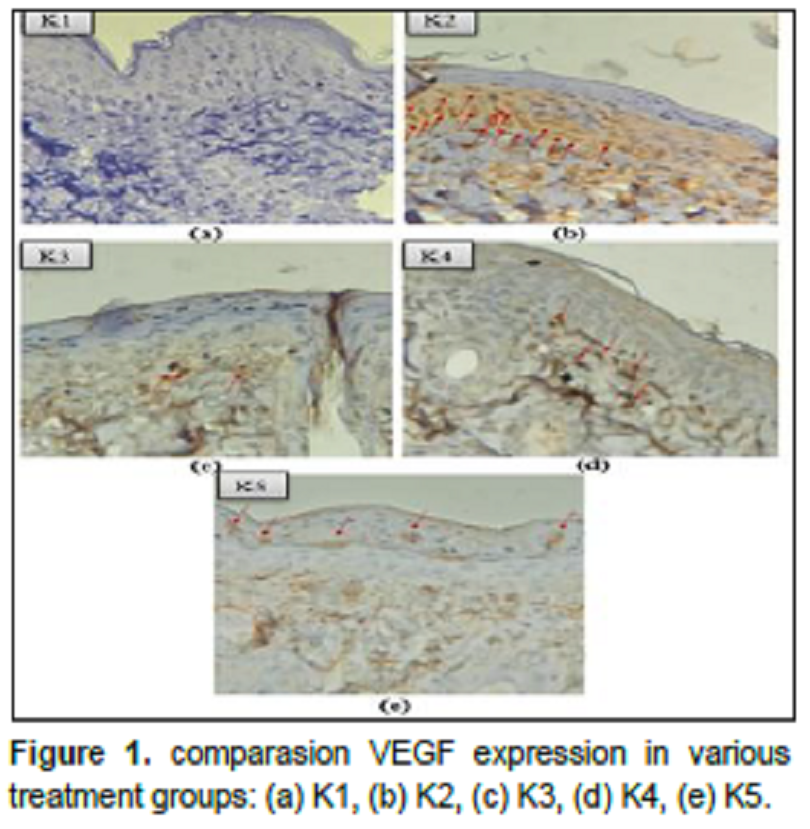
Method: This experimental post-test only control group study used 30 BALB/c mice assigned to five groups: healthy control (K1), UVB-exposed negative control (K2), UVB + 0.025% retinoid serum (K3), UVB + 2% kelakai serum (K4), and UVB + 4% kelakai serum (K5). UVB exposure (160 mJ/cm²) was given for 14 days followed by topical treatment. Skin tissues were examined using immunohistochemistry to assess VEGF and IL-6 expression. Data were analyzed using the Kruskal–Wallis test followed by Mann–Whitney.
Results: VEGF and IL-6 expression were highest in K2 and lowest in K1. Both retinoid and kelakai serum significantly reduced expression levels (p<0.05). The 4% kelakai serum (K5) produced greater reductions than the 2% dose, approaching the effect of retinoid serum.
Conclusion: Kelakai leaf extract serum at 4% effectively decreases VEGF and IL-6 expression in UVB-exposed mice, supporting its potential as a natural anti-photoaging agent.
Copyright (c) 2025 MEDISAINS

This work is licensed under a Creative Commons Attribution-NonCommercial 4.0 International License.
Authors who publish with this journal agree to the following terms:Authors retain copyright and grant the journal right of first publication with the work simultaneously licensed under a Creative Commons Attribution-NonCommercial 4.0 International License that allows others to share the work with an acknowledgement of the work's authorship and initial publication in this journal.
Authors are able to enter into separate, additional contractual arrangements for the non-exclusive distribution of the journal's published version of the work (e.g., post it to an institutional repository or publish it in a book), with an acknowledgement of its initial publication in this journal.
Authors are permitted and encouraged to post their work online (e.g., in institutional repositories or on their website) prior to and during the submission process, as it can lead to productive exchanges, as well as earlier and greater citation of published work (See The Effect of Open Access).
This work is licensed under a Creative Commons Attribution-NonCommercial 4.0 International License.