Topical Jatropha multifida L. ointment improves perineal wound healing in postpartum mothers: a randomized controlled trial

Downloads
Background: Postpartum perineal wound care may lead to infection if not managed properly. Jatropha multifida L. contains various secondary metabolites that may accelerate wound healing; however, clinical evidence remains limited.
Objective: This study aimed to evaluate the effectiveness of Jatropha multifida L. extract ointment compared with standard clean and dry wound care in promoting perineal wound healing.
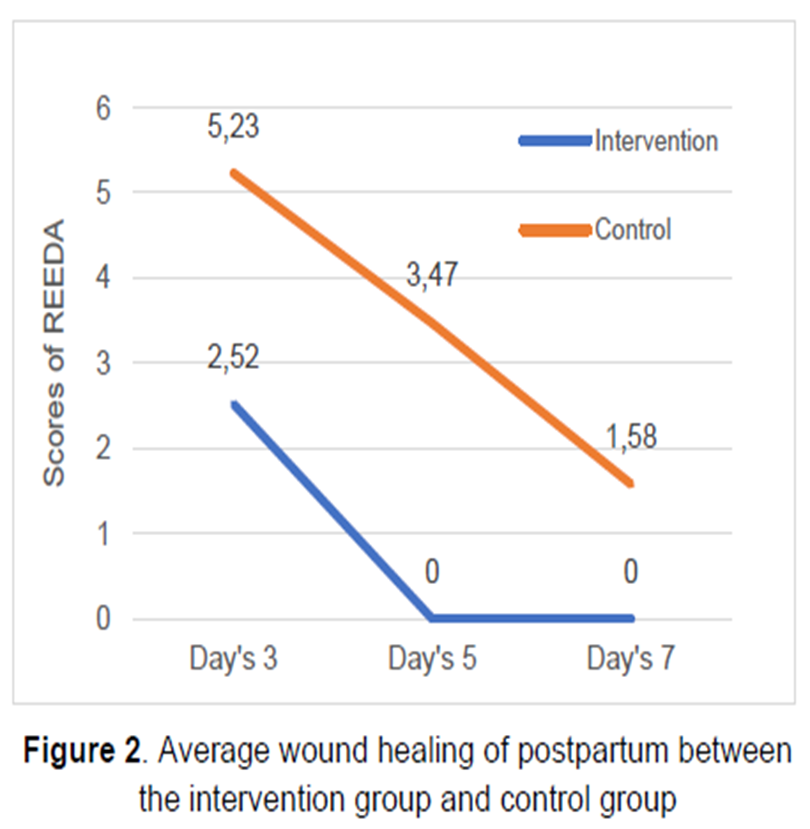
Methods: This was a true experimental study with a pre–posttest control group design. A total of 60 postpartum mothers with second-degree perineal lacerations were randomly assigned into three groups: control, 15% extract, and 20% extract. The interventions were applied twice daily for 7 days. Wound healing was assessed on days 3, 5, and 7 using the REEDA (Redness, Edema, Ecchymosis, Discharge, Approximation) score.
Results: The Friedman test showed a significant reduction in REEDA scores across all groups (p < 0.001). The greatest decrease was observed in the 15% concentration group (mean = 0.4). Cohen’s d indicated a very large effect size (d = 1.835).
Conclusions: Jatropha multifida L. extract ointment at a 15% concentration was effective in improving perineal wound healing in postpartum mothers.

This work is licensed under a Creative Commons Attribution-NonCommercial 4.0 International License.
Authors who publish with this journal agree to the following terms:Authors retain copyright and grant the journal right of first publication with the work simultaneously licensed under a Creative Commons Attribution-NonCommercial 4.0 International License that allows others to share the work with an acknowledgement of the work's authorship and initial publication in this journal.
Authors are able to enter into separate, additional contractual arrangements for the non-exclusive distribution of the journal's published version of the work (e.g., post it to an institutional repository or publish it in a book), with an acknowledgement of its initial publication in this journal.
Authors are permitted and encouraged to post their work online (e.g., in institutional repositories or on their website) prior to and during the submission process, as it can lead to productive exchanges, as well as earlier and greater citation of published work (See The Effect of Open Access).
This work is licensed under a Creative Commons Attribution-NonCommercial 4.0 International License.