Temporal changes in blood glucose levels and organ histopathology in alloxan-induced diabetic rats

Downloads
Background: Diabetes mellitus is a chronic metabolic disorder marked by hyperglycemia due to insulin deficiency or resistance. Alloxan-induced diabetic rat models are widely used to study disease mechanisms and test interventions, yet detailed evaluations of the temporal relationship between hyperglycemia and multi-organ pathology are limited.
Purpose: This study aimed to characterize time-dependent changes in blood glucose and histopathological alterations in the pancreas, liver, and kidneys of alloxan-induced diabetic rats.
Methods: Male Wistar rats were assigned to three groups: control, diabetic for 14 days (A-14), and diabetic for 30 days (A-30). Diabetes was induced with a single intraperitoneal injection of alloxan monohydrate (150 mg/kg). Blood glucose and body weight were monitored every 2-3 days. Histological analysis was conducted at the end of each period.
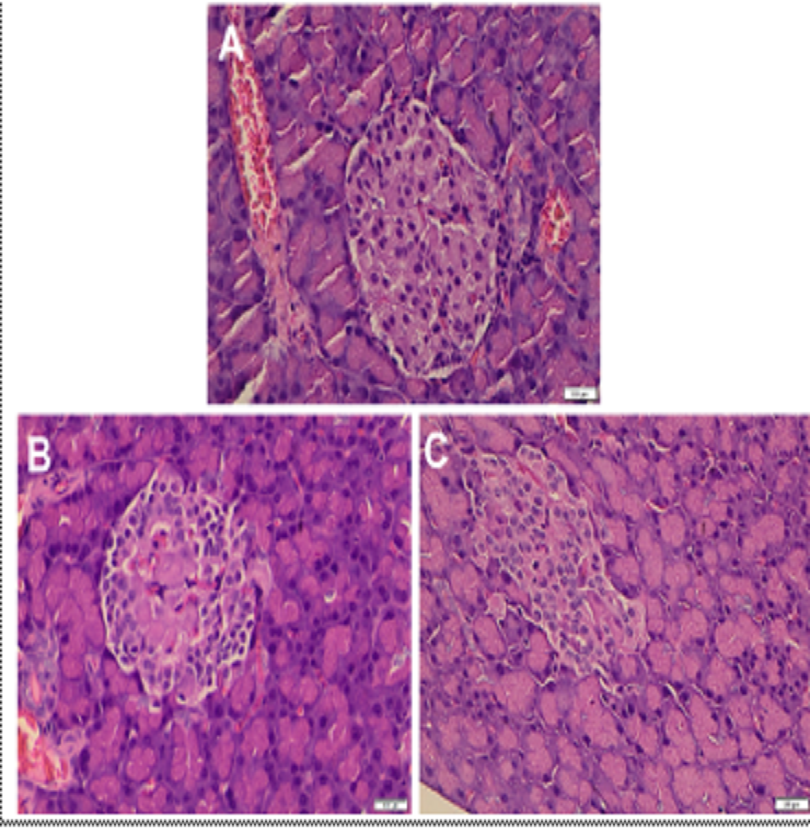
Results: Alloxan induced sustained hyperglycemia (>400 mg/dL), with peak levels of 508.25 mg/dL (A-14) and 544 mg/dL (A-30). A 42.9% dropout rate was recorded, likely due to hypoglycemic episodes shortly after alloxan administration. Diabetic rats showed progressive weight loss and tissue damage. Pancreatic sections revealed islet distortion, cellular degeneration, and vacuolization. The liver exhibited increasing sinusoidal congestion and hepatocyte degeneration, while the kidneys showed glomerular shrinkage, tubular epithelial vacuolization, and peritubular congestion over time.
Conclusion: Alloxan-induced diabetes causes time-dependent hyperglycemia and histopathological damage in the pancreas, liver, and kidneys.

This work is licensed under a Creative Commons Attribution-NonCommercial 4.0 International License.
Authors who publish with this journal agree to the following terms:Authors retain copyright and grant the journal right of first publication with the work simultaneously licensed under a Creative Commons Attribution-NonCommercial 4.0 International License that allows others to share the work with an acknowledgement of the work's authorship and initial publication in this journal.
Authors are able to enter into separate, additional contractual arrangements for the non-exclusive distribution of the journal's published version of the work (e.g., post it to an institutional repository or publish it in a book), with an acknowledgement of its initial publication in this journal.
Authors are permitted and encouraged to post their work online (e.g., in institutional repositories or on their website) prior to and during the submission process, as it can lead to productive exchanges, as well as earlier and greater citation of published work (See The Effect of Open Access).
This work is licensed under a Creative Commons Attribution-NonCommercial 4.0 International License.