A holistic quantum complementary care model for childbirth: effects on maternal physical and psychological outcomes

Downloads
Background: The quantum complementary care model is an integrative maternity care approach that combines several non-pharmacological interventions, including the Rebozo technique, murotal therapy (Quran recitation), hypnotherapy, and aromatherapy. Although evidence supporting each modality individually is growing, no previous studies have conceptualized and implemented these interventions within a holistic complementary care framework during labor.
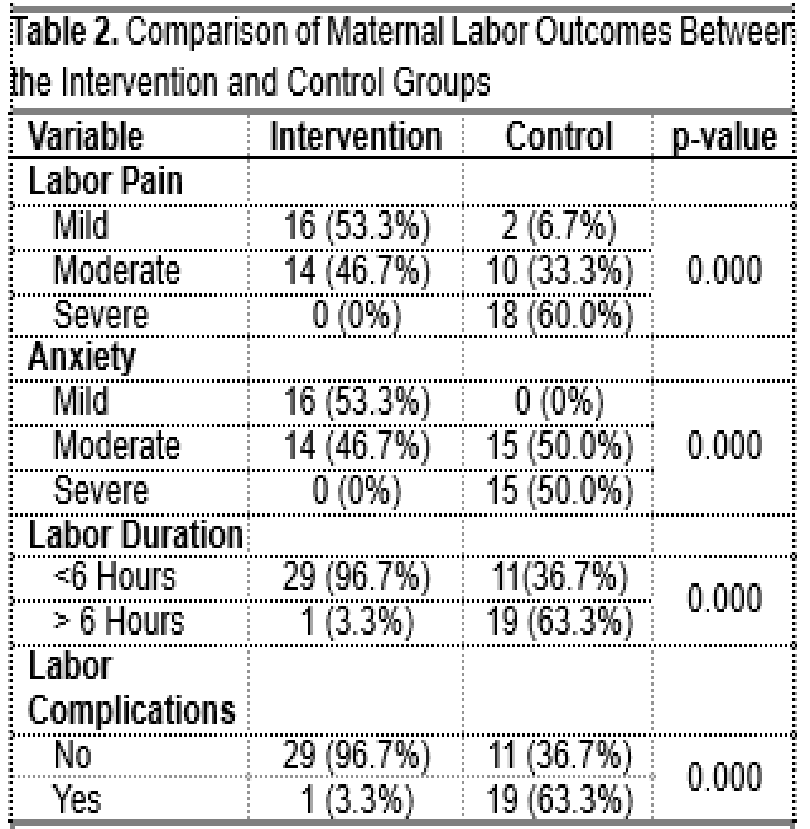
Purpose: This study aimed to determine the effect of the quantum delivery care model on pain and anxiety levels, labor duration, and the risk of delivery complications.
Methods: This research utilized a quasi-experimental design with a posttest-only control group. The study was conducted from June to August 2025 at the Klirong 2 Community Health Center, Kebumen. The population consisted of 334 mothers in labor. Inclusion criteria included pregnant women at term gestation, willingness to participate, and no history of preeclampsia, total placenta previa, or placental abruption. Exclusion criteria were acute complications during labor requiring immediate medical intervention or complete refusal of the intervention. Data analysis was performed used Chi-Square test with a significance level of 0.05.
Results: The findings demonstrated a significant difference in all four maternal outcomes between the groups: pain level (p=0.000), anxiety level (p=0.000), labor duration (p=0.000), and delivery complications (p=0.039).
Conclusion: The quantum complementary care model significantly improved maternal outcomes during labor.

This work is licensed under a Creative Commons Attribution-NonCommercial 4.0 International License.
Authors who publish with this journal agree to the following terms:Authors retain copyright and grant the journal right of first publication with the work simultaneously licensed under a Creative Commons Attribution-NonCommercial 4.0 International License that allows others to share the work with an acknowledgement of the work's authorship and initial publication in this journal.
Authors are able to enter into separate, additional contractual arrangements for the non-exclusive distribution of the journal's published version of the work (e.g., post it to an institutional repository or publish it in a book), with an acknowledgement of its initial publication in this journal.
Authors are permitted and encouraged to post their work online (e.g., in institutional repositories or on their website) prior to and during the submission process, as it can lead to productive exchanges, as well as earlier and greater citation of published work (See The Effect of Open Access).
This work is licensed under a Creative Commons Attribution-NonCommercial 4.0 International License.