Effect of intradialytic mindfulness-based meditation on spiritual well-being and anxiety in hemodialysis patients: a randomized controlled trial

Downloads
Background: Patients undergoing hemodialysis frequently experience anxiety and reduced spiritual well-being; however, few studies have simultaneously addressed these outcomes using structured mindfulness-based interventions delivered during dialysis sessions.
Purpose: To evaluate the effectiveness of intradialytic mindfulness-based meditation in reducing anxiety and improving spiritual well-being among patients undergoing hemodialysis.
Methods: A randomized controlled trial was conducted involving 58 patients undergoing routine hemodialysis, randomly assigned to an intervention group (n = 29) or a control group (n = 29). The intervention group received a 2.5-hour mindfulness training session followed by audio-guided mindfulness practice during the first 15 minutes of hemodialysis sessions, twice weekly for four weeks. The control group rested quietly without guided practice. Anxiety was measured using the Zung Self-Rating Anxiety Scale (ZSAS), and spiritual well-being was assessed using the Spiritual Well-Being Scale (SWBS). Data were analyzed using paired and independent t-tests.
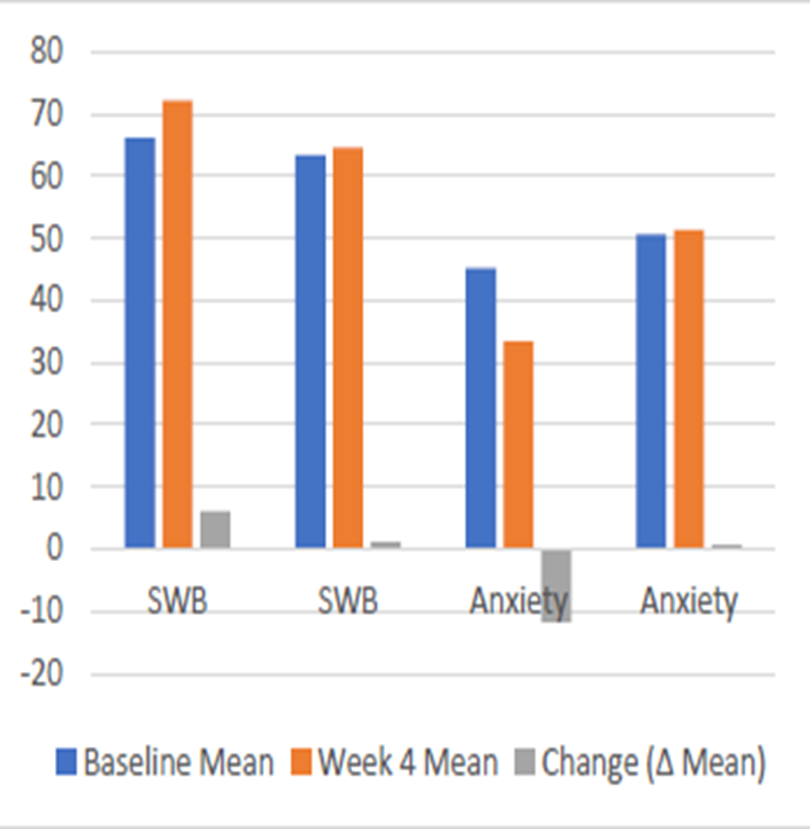
Results: The intervention group showed a significant increase in spiritual well-being scores (mean change +6.07) compared with the control group (+1.21) (p = 0.021). Anxiety scores significantly decreased in the intervention group (−11.76) compared with minimal change in the control group (+0.69) (p = 0.001). The between-group effect sizes were large (SWB: d = 1.36; anxiety: d = −1.88).
Conclusion: Intradialytic mindfulness-based meditation is a feasible and effective complementary intervention that improves spiritual well-being and reduces anxiety among patients undergoing hemodialysis.

This work is licensed under a Creative Commons Attribution-NonCommercial 4.0 International License.
Authors who publish with this journal agree to the following terms:Authors retain copyright and grant the journal right of first publication with the work simultaneously licensed under a Creative Commons Attribution-NonCommercial 4.0 International License that allows others to share the work with an acknowledgement of the work's authorship and initial publication in this journal.
Authors are able to enter into separate, additional contractual arrangements for the non-exclusive distribution of the journal's published version of the work (e.g., post it to an institutional repository or publish it in a book), with an acknowledgement of its initial publication in this journal.
Authors are permitted and encouraged to post their work online (e.g., in institutional repositories or on their website) prior to and during the submission process, as it can lead to productive exchanges, as well as earlier and greater citation of published work (See The Effect of Open Access).
This work is licensed under a Creative Commons Attribution-NonCommercial 4.0 International License.