Protective effects of Gyrinops versteegii leaf ethanol extract on Leydig cells and testosterone under excessive physical activity: an in vivo study

Downloads
Background: Excessive physical activity may lead to overtraining syndrome and increased oxidative stress, which can reduce Leydig cell count and testosterone levels. Gaharu (Gyrinops versteegii) leaf ethanol extract contains strong antioxidants that may counteract oxidative damage. However, the effects of excessive physical activity on Leydig cells and testosterone remain unexplored.
Purpose: This study aimed to evaluate the protective effects of Gyrinops versteegii leaf ethanol extract on male reproductive parameters under excessive physical activity conditions.
Methods: This experimental study employed a randomized, post-test control-group design. Twenty-five adult male Wistar rats were divided into five groups: normal control, excessive physical activity control, and three treatment groups receiving Gyrinops versteegii leaf ethanol extract at 100, 200, and 400 mg/kg BW. Leydig cell counts and serum testosterone levels were analyzed using ANOVA and correlation tests.
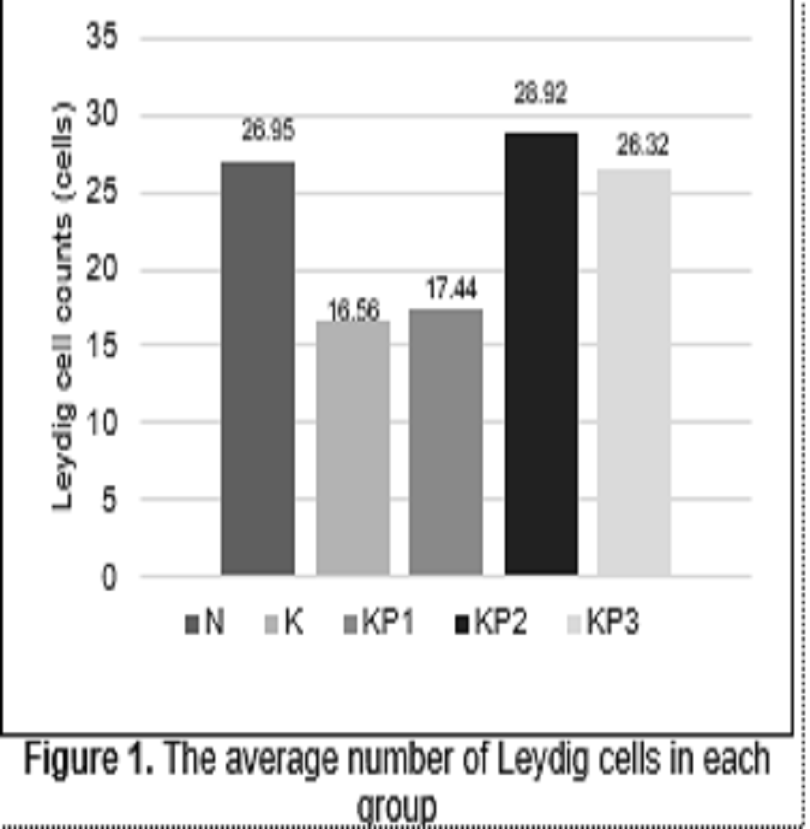
Results: The highest Leydig cell count and testosterone level were observed in the 200 mg/kgBW group (28.92 cells and 1.822 ng/mL, respectively). Significant differences in Leydig cell counts were observed among groups (p<0.001), and a positive correlation between Leydig cell number and testosterone levels was observed (p=0.006).
Conclusion: Gyrinops versteegii leaf ethanol extract demonstrated protective effects against reproductive impairment induced by excessive physical activity in vivo, with an optimal dose of 200 mg/kgBW.

This work is licensed under a Creative Commons Attribution-NonCommercial 4.0 International License.
Authors who publish with this journal agree to the following terms:Authors retain copyright and grant the journal right of first publication with the work simultaneously licensed under a Creative Commons Attribution-NonCommercial 4.0 International License that allows others to share the work with an acknowledgement of the work's authorship and initial publication in this journal.
Authors are able to enter into separate, additional contractual arrangements for the non-exclusive distribution of the journal's published version of the work (e.g., post it to an institutional repository or publish it in a book), with an acknowledgement of its initial publication in this journal.
Authors are permitted and encouraged to post their work online (e.g., in institutional repositories or on their website) prior to and during the submission process, as it can lead to productive exchanges, as well as earlier and greater citation of published work (See The Effect of Open Access).
This work is licensed under a Creative Commons Attribution-NonCommercial 4.0 International License.