Potential of turmeric (Curcuma Longa Linn.) extract gel in the healing of perineal lacerations

Downloads
Background: A perineal tear affects around 85% of women who give birth vaginally. Previous animal research has demonstrated the beneficial effects of turmeric extract gel on wound healing, which speeds up the process of repairing wounded tissue. However, since this research is only in vivo, more studies and clinical trials are required to evaluate the efficacy of using turmeric extract gel to treat perineal lacerations.
Purpose: To analyze the potential of turmeric extract gel (Curcuma Longa Linn.) in reducing REEDA score and IL-6 levels in postpartum women.
Method: This is a quasi-experiment study with pretest–posttest with control group design. The study respondents comprised 20 people in the intervention group who were given turmeric extract gel and amoxicillin and 20 in the control group who were given amoxicillin for seven days. Measurement of wound healing using the REEDA score while IL-6 levels using ELISA. Data analysis of used Friedman and Wilcoxon tests.
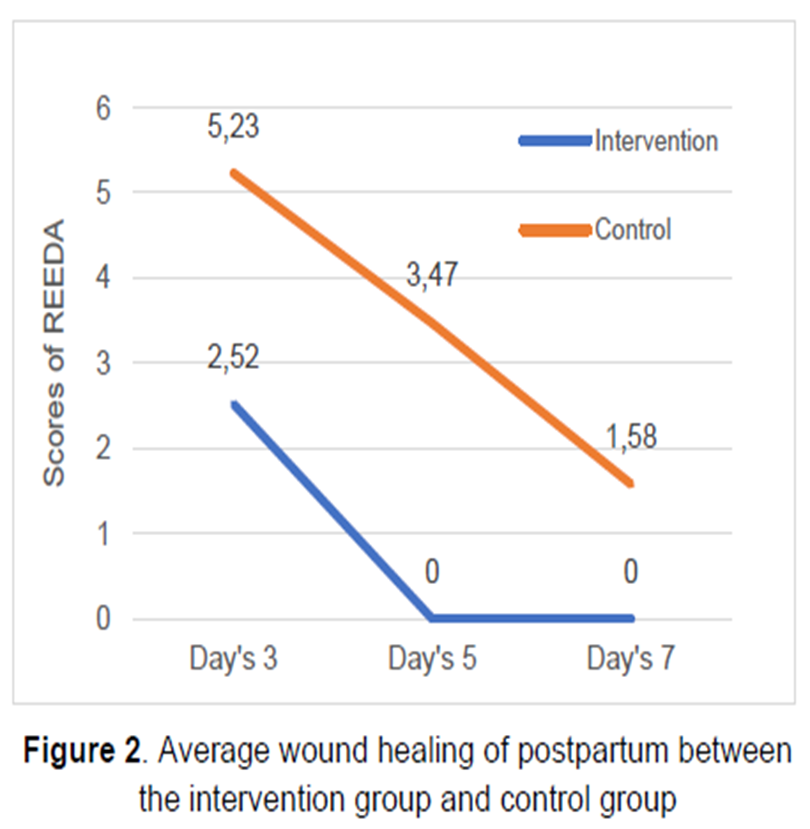
Results: There was a significant decrease in the intervention group's REEDA score and IL-6 levels (p<0.05). There was a significant difference in the average decrease in REEDA score and IL-6 levels between the two groups (p<0.05). The administration of turmeric extract gel led to faster wound healing for two days compared to the control group, which was only given standard treatment.
Conclusion: Turmeric extract gel can reduce REEDA score and IL-6 levels.Authors retain copyright and grant the journal right of first publication with the work simultaneously licensed under a Creative Commons Attribution-NonCommercial 4.0 International License that allows others to share the work with an acknowledgement of the work's authorship and initial publication in this journal.
Authors are able to enter into separate, additional contractual arrangements for the non-exclusive distribution of the journal's published version of the work (e.g., post it to an institutional repository or publish it in a book), with an acknowledgement of its initial publication in this journal.
Authors are permitted and encouraged to post their work online (e.g., in institutional repositories or on their website) prior to and during the submission process, as it can lead to productive exchanges, as well as earlier and greater citation of published work (See The Effect of Open Access).

This work is licensed under a Creative Commons Attribution-NonCommercial 4.0 International License.