Kersen leaf extract gel (Muntingia calabura L.) to Improve the healing of perineal wounds in postpartum mothers


Downloads
Additional Files
Background: Delivery processes experience 90% perineal rupture—worldwide. Previous research on test animals proved the effect of cherry leaf gel on wound healing can kill microorganisms, increase collagen, and repair wound tissue. However, no research has been found on healing perineal wounds in postpartum mothers using cherry leaf gel, so this research is necessary.
Purpose: Making and testing kersen leaf extract gel to improve perineal wound healing for postpartum women.
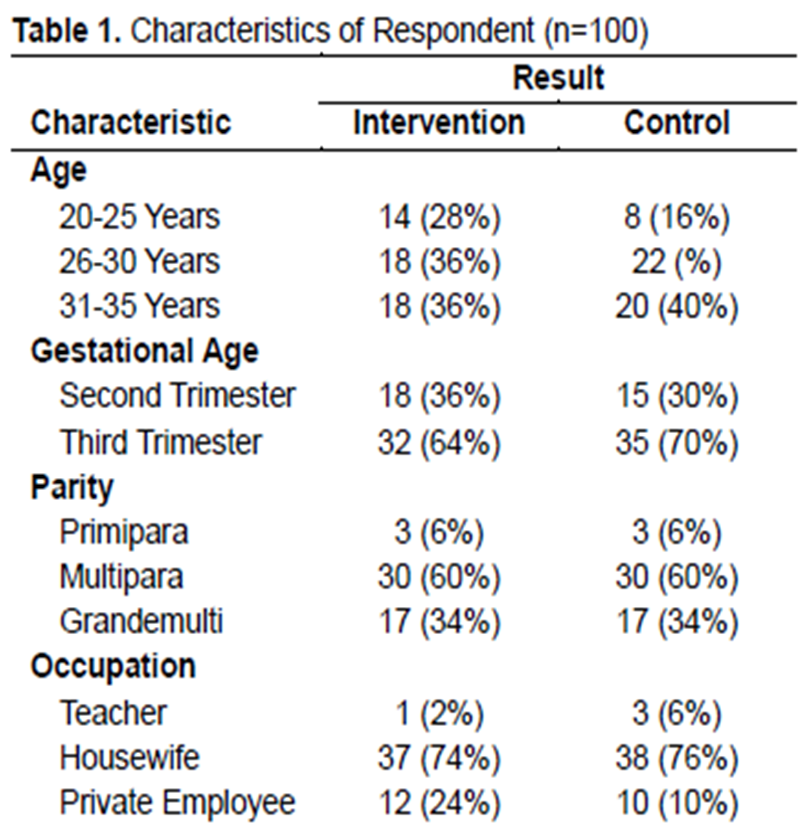
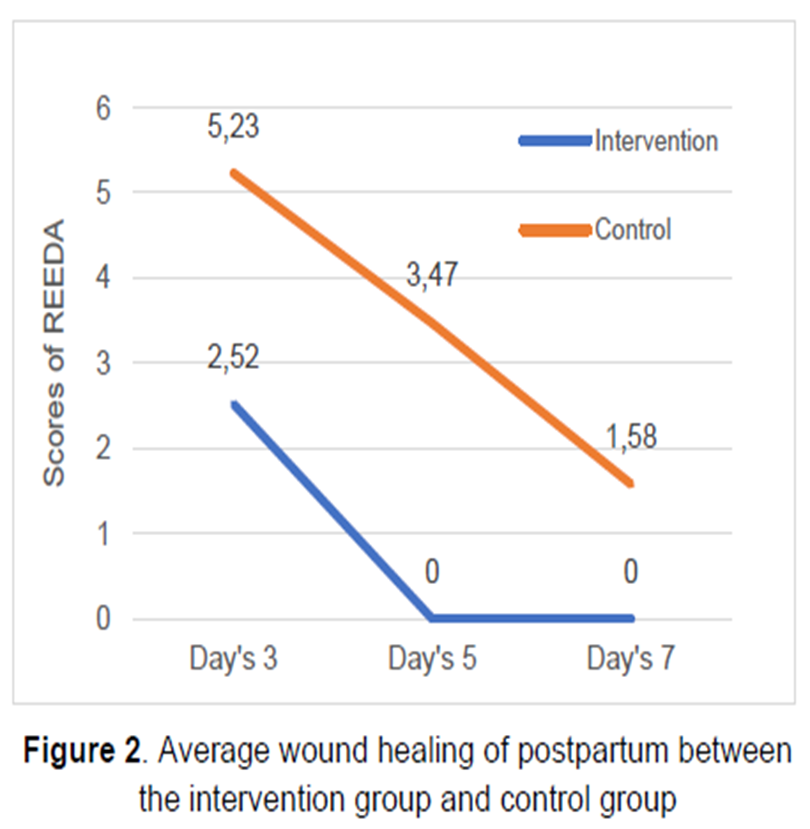
Method:Â This is a quasi-experiment with a pre-post-test with a control group design. The sample consisted of 26 postpartum women with perineal injuries grade 2, divided into two groups (Intervention and control). The intervention was given a combination of kersen leaf gel 25% with antibiotic 2x1 for seven days, and the control group was only given the antibiotic. Perineal wound healing was assessed using the REEDA score. The data analysis used the Mann-Whitney test.
Results: The results showed that the average REEDA score was lower in the intervention group than in the control group on day 3 (5.00±1.155 vs. 5.85±0.801; p=0.038), day 5 (2.31±0.650 vs. 3.23±1.013; p=0.029), and day 7 (0.23±0.439 vs. 1.15±0.987; p=0.039).
Conclusion: Kersen leaf extract gel is effective in improving perineal wound healing in postpartum women.Authors retain copyright and grant the journal right of first publication with the work simultaneously licensed under a Creative Commons Attribution-NonCommercial 4.0 International License that allows others to share the work with an acknowledgement of the work's authorship and initial publication in this journal.
Authors are able to enter into separate, additional contractual arrangements for the non-exclusive distribution of the journal's published version of the work (e.g., post it to an institutional repository or publish it in a book), with an acknowledgement of its initial publication in this journal.
Authors are permitted and encouraged to post their work online (e.g., in institutional repositories or on their website) prior to and during the submission process, as it can lead to productive exchanges, as well as earlier and greater citation of published work (See The Effect of Open Access).

This work is licensed under a Creative Commons Attribution-NonCommercial 4.0 International License.