Frailty among hemodialysis patients


Downloads
Introduction: Hemodialysis patients have physical vulnerability due to the progressive decline of the body's systems. The physical changes in the patients can lead to haemostatics failure, known as frailty syndrome. The frail condition can cause maladaptive psychological responses due to changes that can cause anxiety in patients.
Objective: This study aims to determine the prevalence of frailty in hemodialysis patients and to find out the different factor that correlates in frailty patients undergoing hemodialysis therapy.
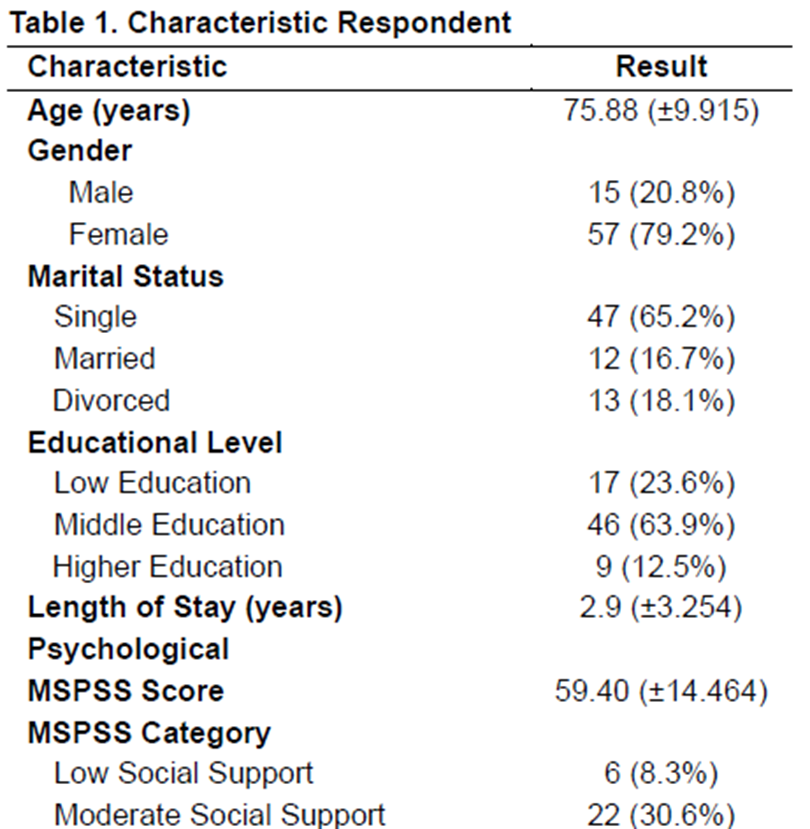
Method: This is a cross-sectional study involving 55 respondents who underwent hemodialysis therapy at the Jember Klinik Hospital. The instruments used in this study were the Edmonton Frail Scale (EFS) and the Hamilton Anxiety Rating Scale.
Results: Moderate frailty was found in 23 patients (41.8%), followed by mild frailty in 18 patients (32.7%) and severe frailty in 14 patients (25.5%). In terms of anxiety, 18 patients (32.7%) had severe anxiety, 20 had moderate anxiety (36.4%), 12 (21.8%) had mild anxiety, and the other 7 (12.7%) were not anxious. The statistical analysis shows a significant difference in the average level of anxiety and the frailty status (p<0.001) among the patients.
Conclusion: Frailty was highly prevalent in hemodialysis patients and had relations with anxiety and different sociodemographic characteristics of patients. The assessment of frailty should be considered when clinicians intervene and prevent worsening in patients.Authors retain copyright and grant the journal right of first publication with the work simultaneously licensed under a Creative Commons Attribution-NonCommercial 4.0 International License that allows others to share the work with an acknowledgement of the work's authorship and initial publication in this journal.
Authors are able to enter into separate, additional contractual arrangements for the non-exclusive distribution of the journal's published version of the work (e.g., post it to an institutional repository or publish it in a book), with an acknowledgement of its initial publication in this journal.
Authors are permitted and encouraged to post their work online (e.g., in institutional repositories or on their website) prior to and during the submission process, as it can lead to productive exchanges, as well as earlier and greater citation of published work (See The Effect of Open Access).

This work is licensed under a Creative Commons Attribution-NonCommercial 4.0 International License.