Antibacterial activity and perineal wound healing of swallow’s gel extracts

Downloads
Background: Swallow's nest has a glycol content of proteins, carbohydrates (25.62–27.26%), and proteins (62–63%); protein is an indispensable content for the healing process of perineal wounds, protein plays the main ingredient in cell formation, and repairs damaged tissues. In previous studies, swallow's nest extract against perineal wounds in mice obtained the results of accelerated healing on days 3 and 4. However, no studies have been conducted on human perineal injuries.
Purpose: Knowing the effectiveness of the swallow's nest extract gel (Aerodramus Fuciphagus) 30% against wound healing and a decrease in the number of colonies of staphylococcus aureus bacteria in the perineal wounds of the postpartum mother.
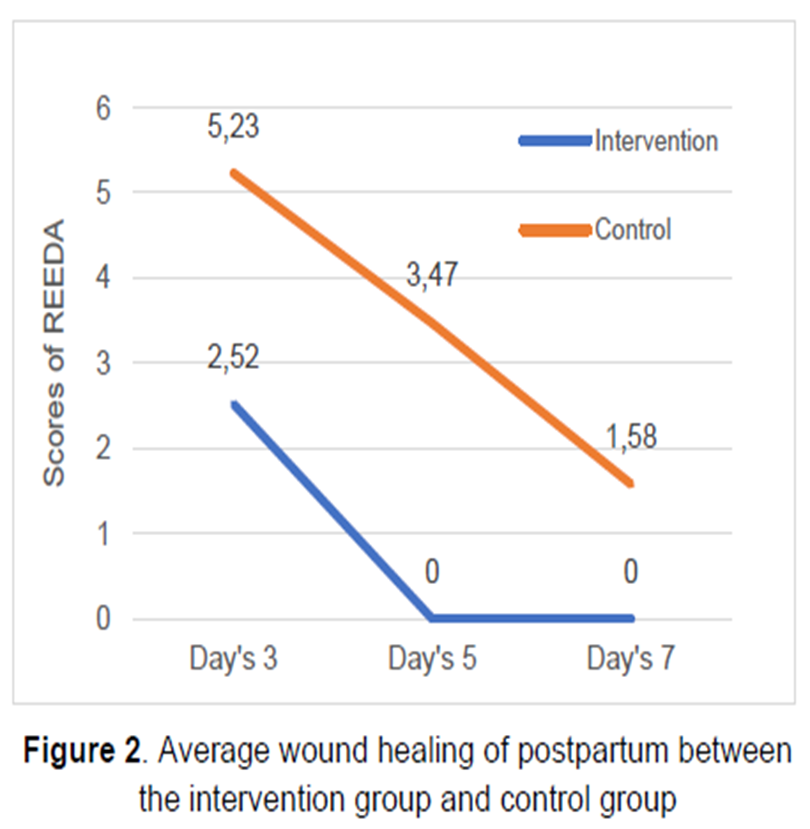
Methods: This experiment study has a post-test with a control group design. The sample comprised 34 postpartum maternal respondents divided into two groups randomly (intervention and control groups). The intervention group was given gel from swallow's nest extract while the control group carried out a dry clean treatment; both were treated to the wound. Perineal wound healing based on REEDA scores was analyzed using the Friedman test, while bacteria in perineal wounds were analyzed using the Man-Whitney test.
Results: Based on the REEDA scale, the perineal wound healing rate in the intervention group was better, where healing had already occurred on day 5, compared to the control group that occurred on day 7 (p<0.0001). The number of bacteria in the perineal wounds of the intervention group was less, with an average of 0.06 CFU, compared to the control group's average control group's average of 1.11 CFU (p<0.05).
Conclusion: Swallow's nest extract is influential and beneficial in healing perineal wounds in postpartum mothers and has antibacterial activity.Authors retain copyright and grant the journal right of first publication with the work simultaneously licensed under a Creative Commons Attribution-NonCommercial 4.0 International License that allows others to share the work with an acknowledgement of the work's authorship and initial publication in this journal.
Authors are able to enter into separate, additional contractual arrangements for the non-exclusive distribution of the journal's published version of the work (e.g., post it to an institutional repository or publish it in a book), with an acknowledgement of its initial publication in this journal.
Authors are permitted and encouraged to post their work online (e.g., in institutional repositories or on their website) prior to and during the submission process, as it can lead to productive exchanges, as well as earlier and greater citation of published work (See The Effect of Open Access).

This work is licensed under a Creative Commons Attribution-NonCommercial 4.0 International License.